Which species are considered part of the group? Are they all Baleen whales? What is their conservation status?
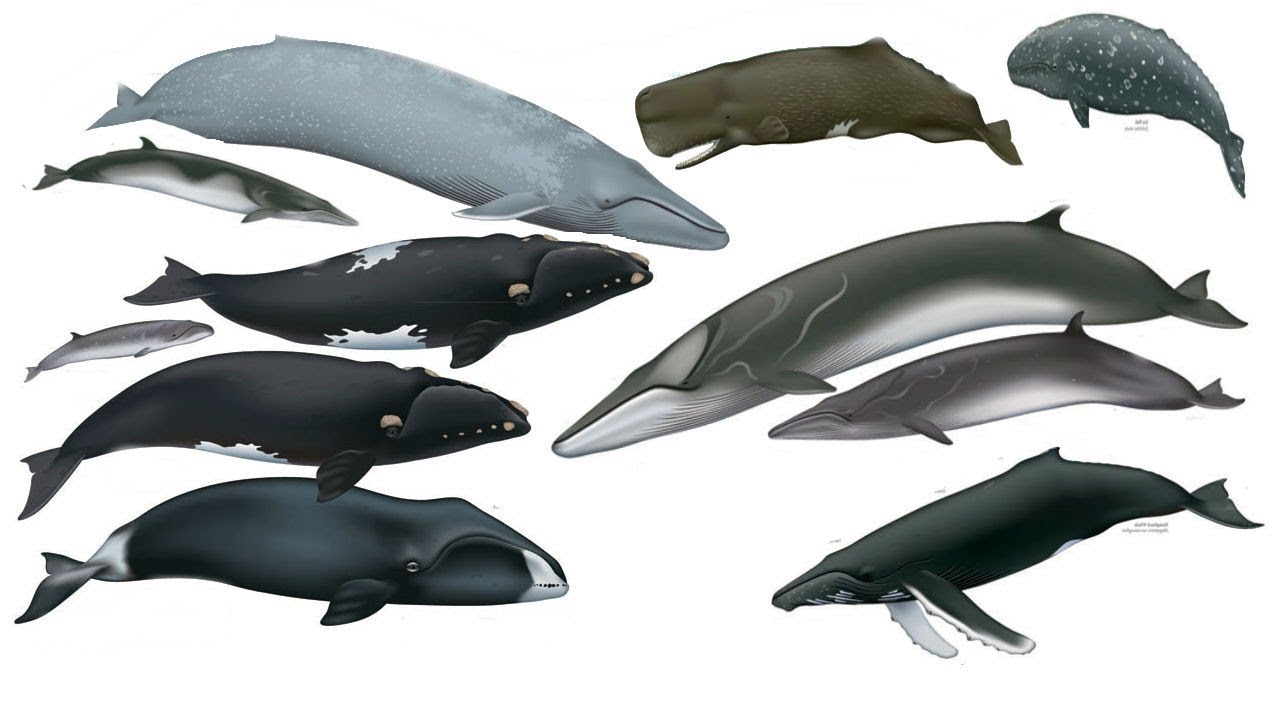
Your one-stop guide to the Great whales:
Your one-stop guide to the Great whales:
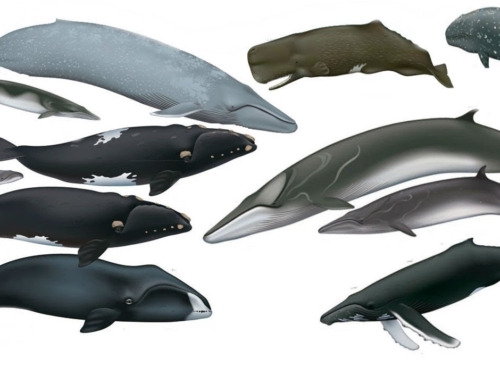
The term ‘Great whales’ does not refer to a taxonomic classification. Rather, it is a name given to the select group of 13 extremely large Cetacean species that can still be found in the Ocean today. All are Baleen whales with the exception of the Sperm whale, which is by far the largest member of the toothed whale family. Some, such as the Blue and Fin whale or the three Right whale species, are close genetic relatives. They inhabit every corner of the seas, from icy polar regions to warm equatorial waters and the unfathomably deep open ocean to the shallow coasts of every continent. This small group of big creatures represents the success stories of an evolutionary journey that has spanned over 50 million years and seen hundreds of species come and go. Sadly, some members of the group may not see the end of this century.
The Great whales have something else in common besides their extraordinary size. Most species in this group suffered greatly at the hands of the commercial whaling industry. Some only made it to the end of the last century because of the global moratorium on whaling imposed by the IWC (International Whaling Commission) in 1985. Today, 7 of the 13 Great whale species are listed as either endangered or vulnerable. Read on to find out more about each species’ conservation status, distribution and other interesting facts.
Blue whale
Scientific name: Balaenoptera musculus
Maximum size: 33m (110ft) & 180 metric tons (396 000lbs) – Females slightly larger than males
Lifespan: 70 – 90 years (exceeding 110 in some cases)
Distribution: All major ocean basins, except the Bering Sea and the Arctic Ocean
Diet: Almost exclusively Euphausiacea (krill), in some cases Dendrobranchiata (prawns) and other small organisms
Conservation status: All populations considered either ‘endangered’ or ‘at risk’. In some cases there is insufficient data to make accurate assessments. The current global population is between 3-11% the size of a 1911 estimate.
Interesting fact: Scientists believe that hydrodynamic and biological constraints ensure that 33m is not only a record but also an absolute maximum when it comes to Blue whale size.
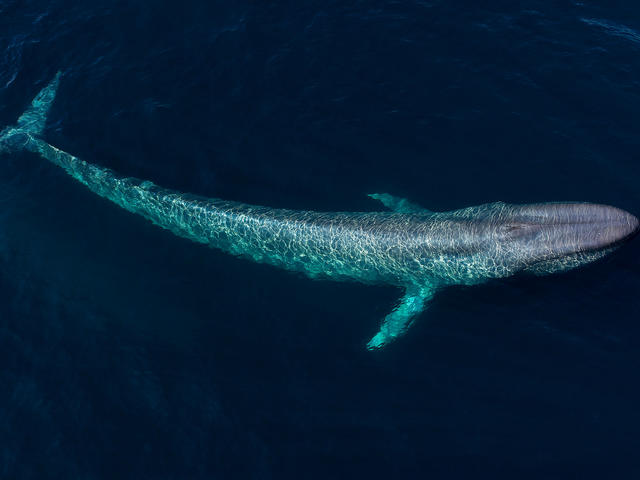
Blue whale – image: WWF
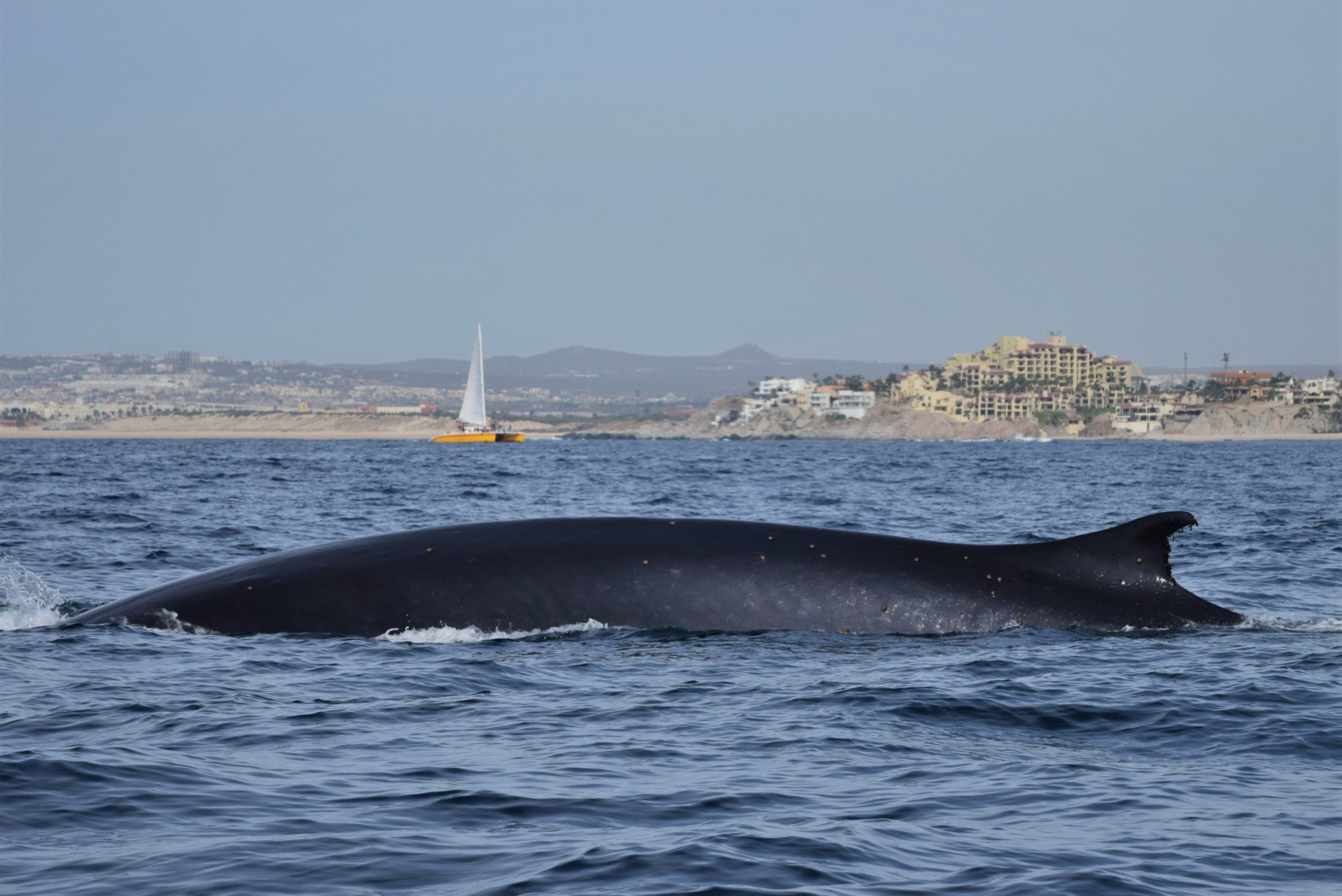
Fin Whale – Image: Whale Watch Cabo
Fin whale
Scientific name: Balaenoptera physalus
Maximum size and weight: 26m (85ft) & 80 metric tons (176 000lbs) – Females slightly bigger than males
Lifespan: 75-90 years (exceeding 140 in some cases)
Distribution: All major ocean basins from tropical to polar waters, absent only in areas close to the ice pack.
Conservation status: ‘Data deficient’ in most regions. In general, populations appear stable and may be experiencing moderate growth.
Interesting fact: The Fin whale is thought to be the fastest of all Cetaceans. They have been clocked at over 46km/h (29mph)!
Sperm whale
Scientific name: Physeter macrocephalus
Maximum size and weight: Males can measure over 21m (70ft) and exceed 83 metric tons (183 000lbs). Females are much smaller, reaching 13m (43ft) and 20 metric tons (44 000lbs)
Lifespan: 70-80 years (probably exceeding 100 in some cases)
Distribution: All major ocean basins. Both sexes prefer ice-free waters over 1000m (3300ft) deep, only adult males populate higher latitudes
Conservation status: ‘At risk’. Populations grow slowly due to low reproductive rate of the species and have thus struggled to recover since the end of commercial whaling.
Interesting facts: Sperm whales have the largest brain of any creature on Earth and are the second deepest diving marine mammal after Curvier’s beaked whale, reaching depths of over 2000m (6600ft)!
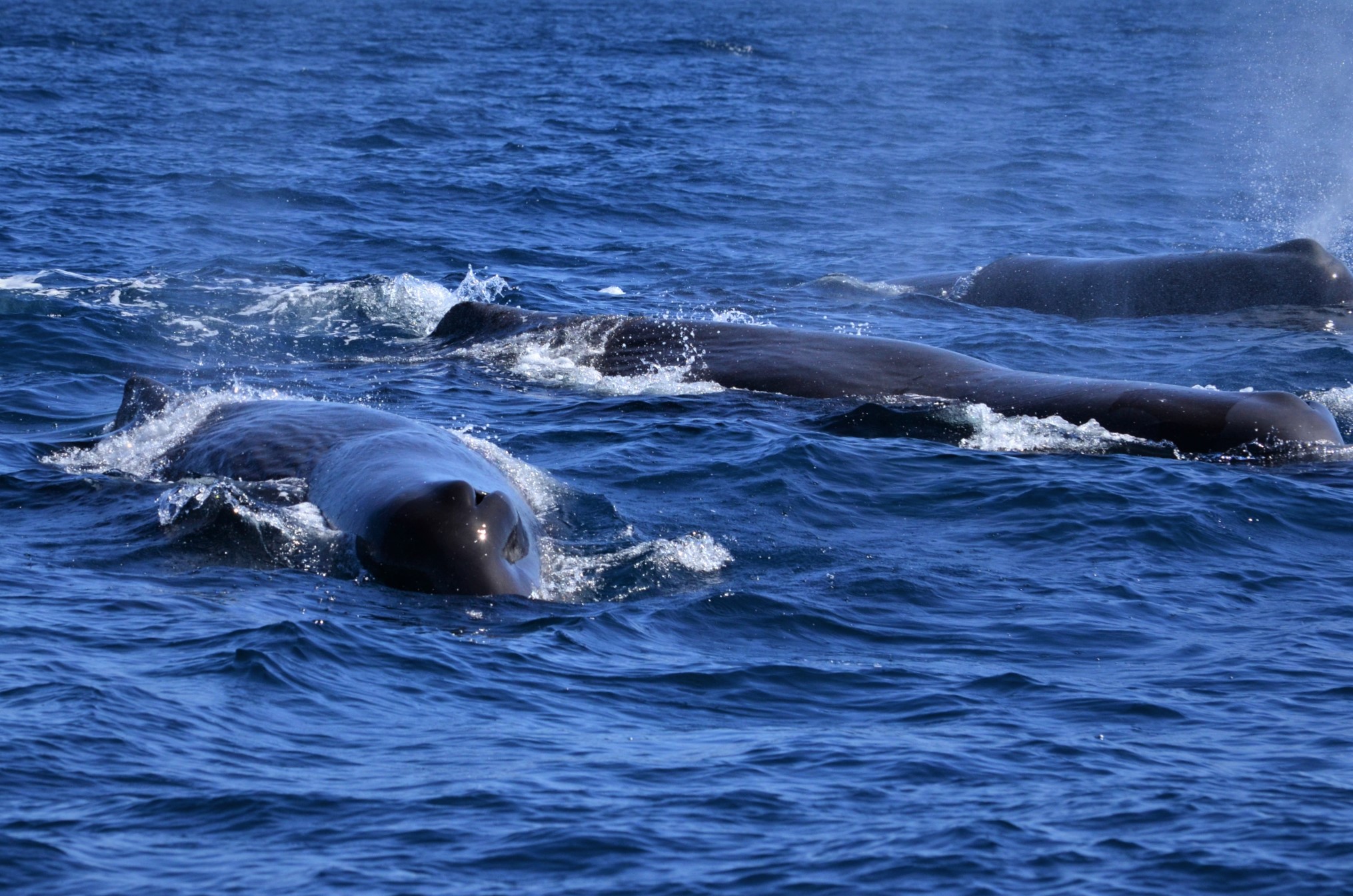
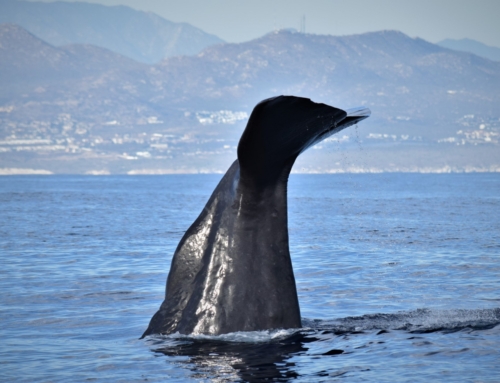
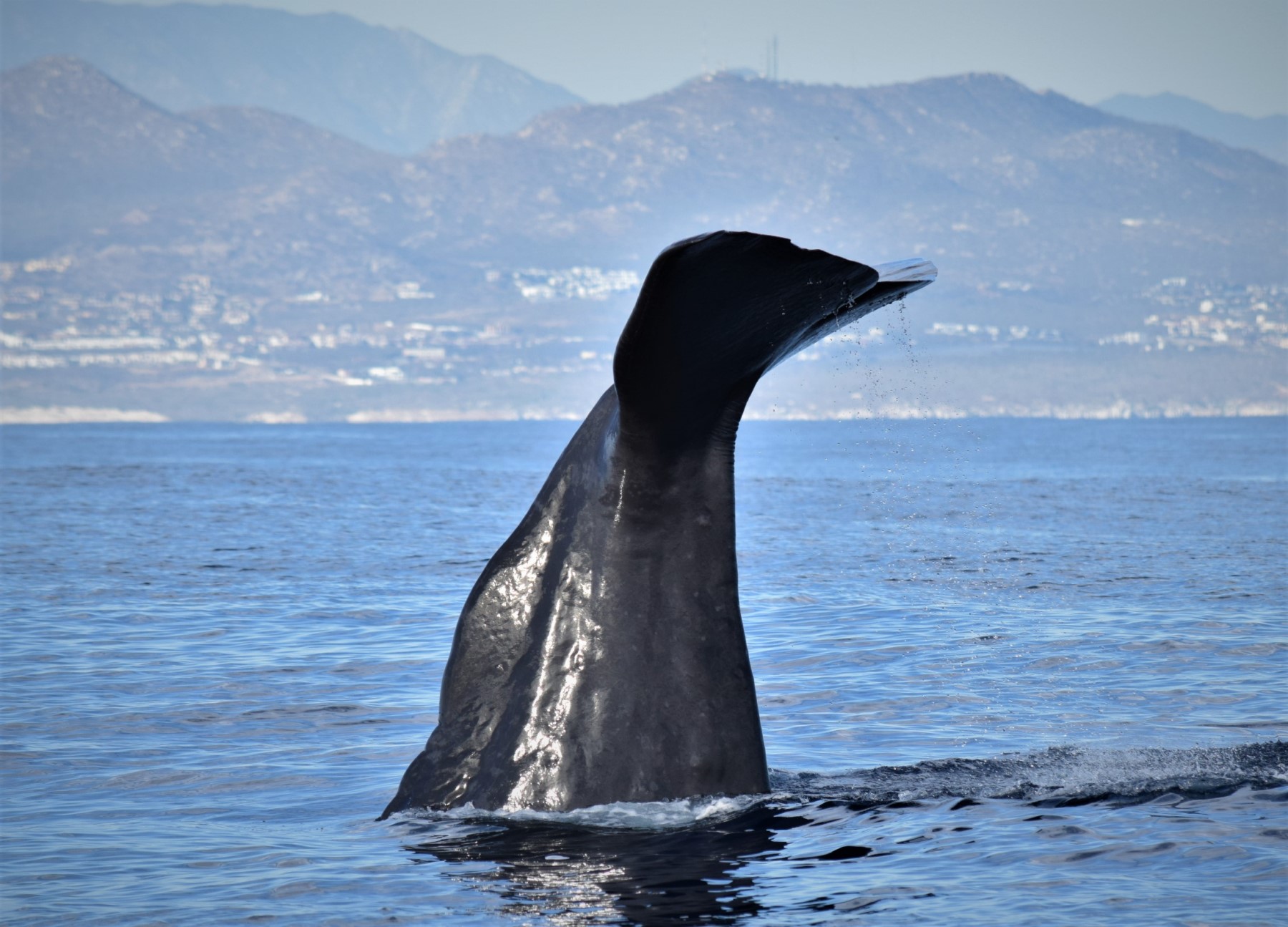
Sperm whales – Image: Whale Watch Cabo
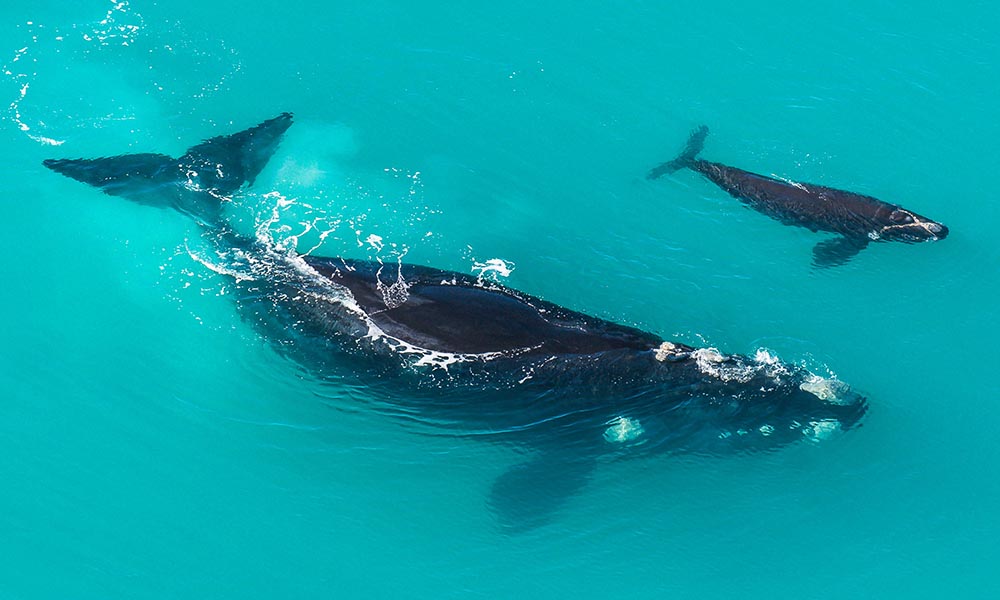
Southern Right whales – Image: WWF
Southern Right whale
Scientific name: Eubalaena australis
Maximum size and weight: 18m (60ft) & 80 tons (177 000lbs) – Females slightly larger than males
Lifespan: Up to and exceeding 100 years
Distribution: Entire Southern Ocean from Antarctica to Australia, Southern Africa & South America
Diet: Copepods, krill, mysids and plankton
Conservation status: ‘Endangered’ but recovering at about 7% per year
Interesting fact: Southern Right whales engage in a unique behavior, known as tail sailing. They use their elevated flukes to catch the wind, remaining in the same position for considerable amount of time.
North Atlantic Right whale
Scientific name: Eubalaena glacialis
Maximum size and weight: 19m (65ft) & 90 tons (195 000lbs) – Females slightly larger than males
Lifespan: Up to and exceeding 100 years
Distribution: Northern Atlantic ocean from the Arctic down to North Africa & the Southern reaches of the North American continent
Diet: Copepods and other small invertebrates such as krill, pteropods, and larval barnacles
Conservation status: ‘Critically endangered’
Interesting fact: The North Atlantic Right whale, like the other species of Right whales, were thus named because they were seen by whalers as the easiest whales to hunt because of their slow speed, coastal habitat and the fact that they float for a long time even once dead.
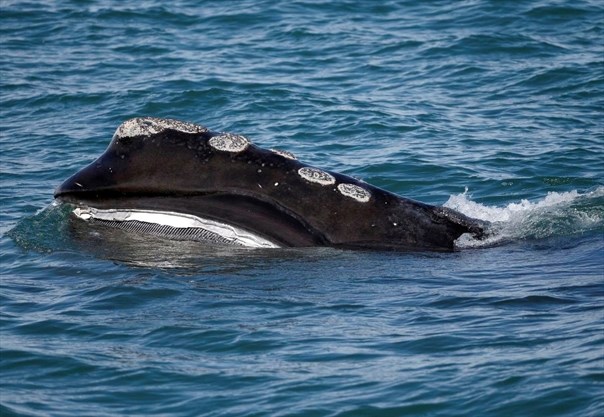
North Atlantic Right whale – Image: Peterborough Examiner
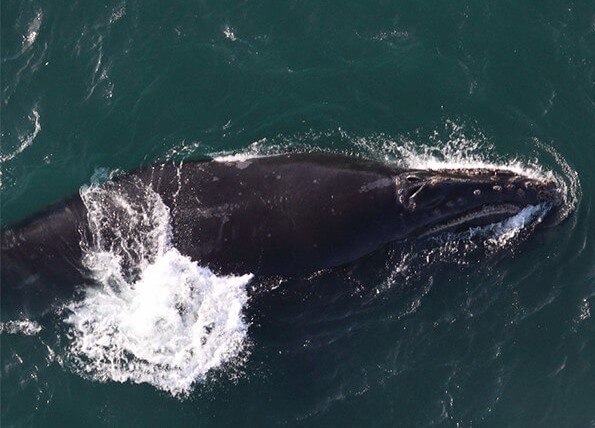
North Pacific Right whale – Image: Marine Mammal Commission
North Pacific Right whale
Scientific name: Eubalaena japonica
Maximum size and weight: 20m (70ft) & 100 tons (221 000lbs) – Females slightly larger than males
Lifespan: 70-80 years (exceeding 100 in some cases)
Distribution: Northern Pacific from the Bering sea & Alaska to Japan
Diet: Copepods, krill, mysids and plankton
Conservation status: ‘Critically endangered’
Interesting fact: There are only around 40 North Pacific Right whales left, making them one of the Cetacean species most at risk of extinction.
Bowhead whale
Scientific name: Balaena mysticetus
Maximum size and weight: 20m (70ft) & 100 tons (221 000lbs)
Lifespan: Over 260 years
Distribution: Entire Arctic
Diet: Copepods & euphausiids
Conservation status: ‘Least concern’
Interesting fact: Bowhead whales are the only Great whale species who spend their entire lives in the icy higher latitudes, explaining their record blubber thickness and possibly their stunningly long lifespans!
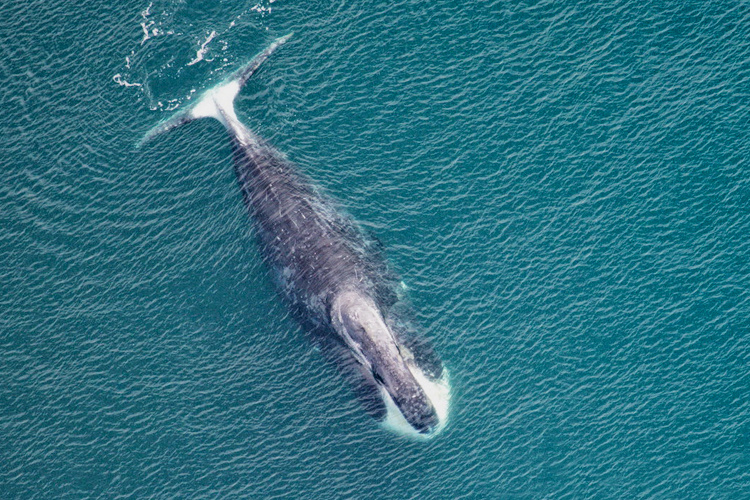
Bowhead whale – Image: NOAA Fisheries
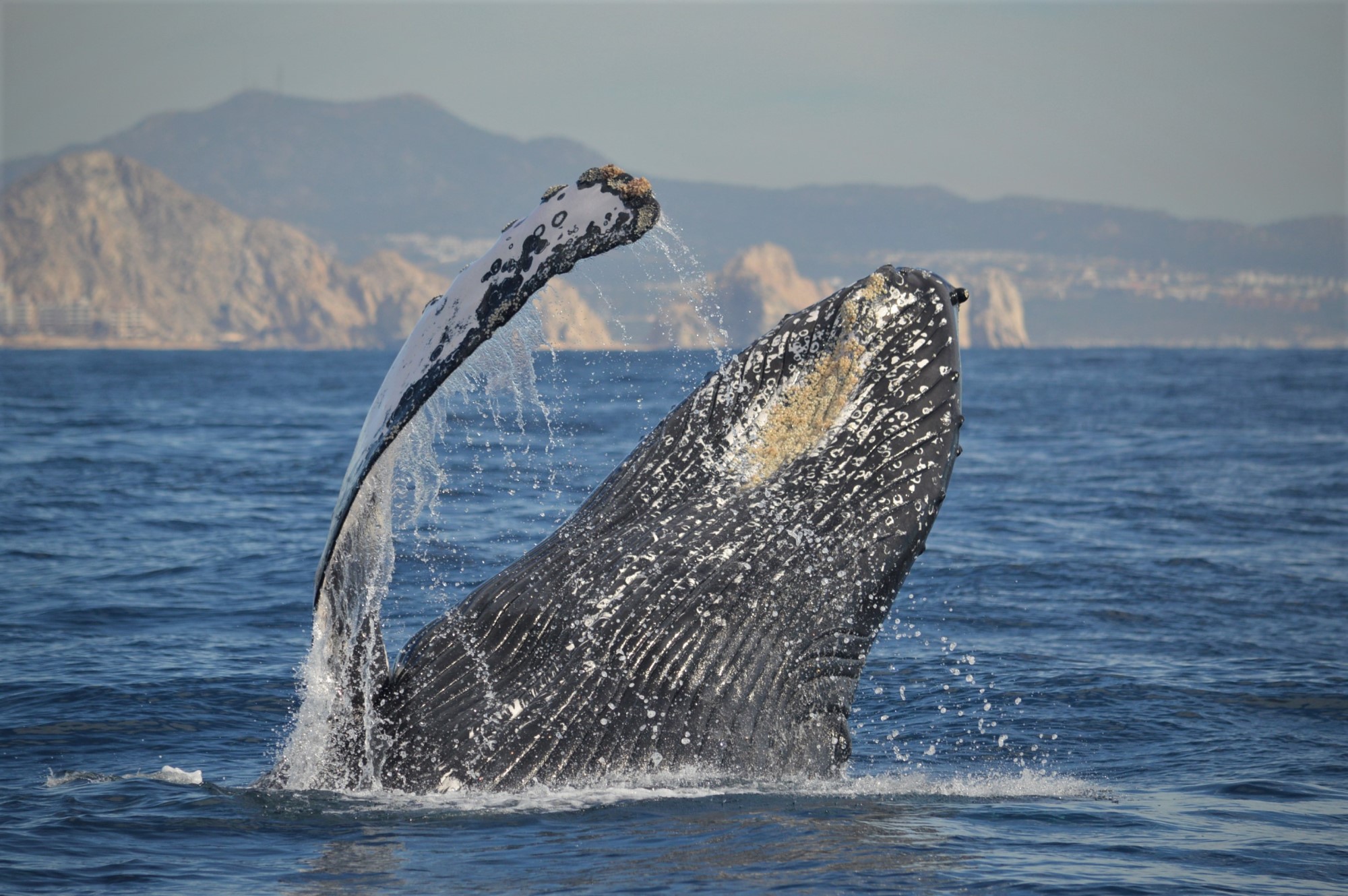
Humpback whale – Image: Whale watch Cabo
Humpback whale
Scientific name: Megaptera novaeangliae
Maximum size and weight: 18m (60ft) & 50 tons (110 000lbs) – Females slightly larger than males
Lifespan: 60-80 years (over 100 in come cases)
Distribution: All major ocean basins from the equator to high latitudes depending on seasonal migration
Diet: Ranging from small crustaceans such as euphausia and copeods to plankton and small fish such as Herring or Mackerel
Conservation status: Most populations are considered ‘least concern’ while two segments are ‘endangered’ and another is ‘at risk’
Interesting fact: Male Humpbacks create the most complex songs of all whales, co-producing a unique song in each regional population every year!
Gray whale
Scientific name: Eschrichtius robustus
Maximum size and weight: 18m (60ft) & 50 tons (110 000lbs)
Lifespan: 70-80 years (exceeding 100 in some cases)
Distribution: Northern Pacific from the Bering Sea & Alaska to Baja California and China
Diet: Mostly benthic crustaceans such as amphipods that live in silt on the sea floor
Conservation status: ‘Least concern’ for Eastern Pacific population while Western Pacific group is severely depleted
Interesting fact: Gray whales undertake the longest known migration of any mammal, traveling as far as 19 000km (12 000mi) each year on their round trip between Baja California and Northern Alaska.
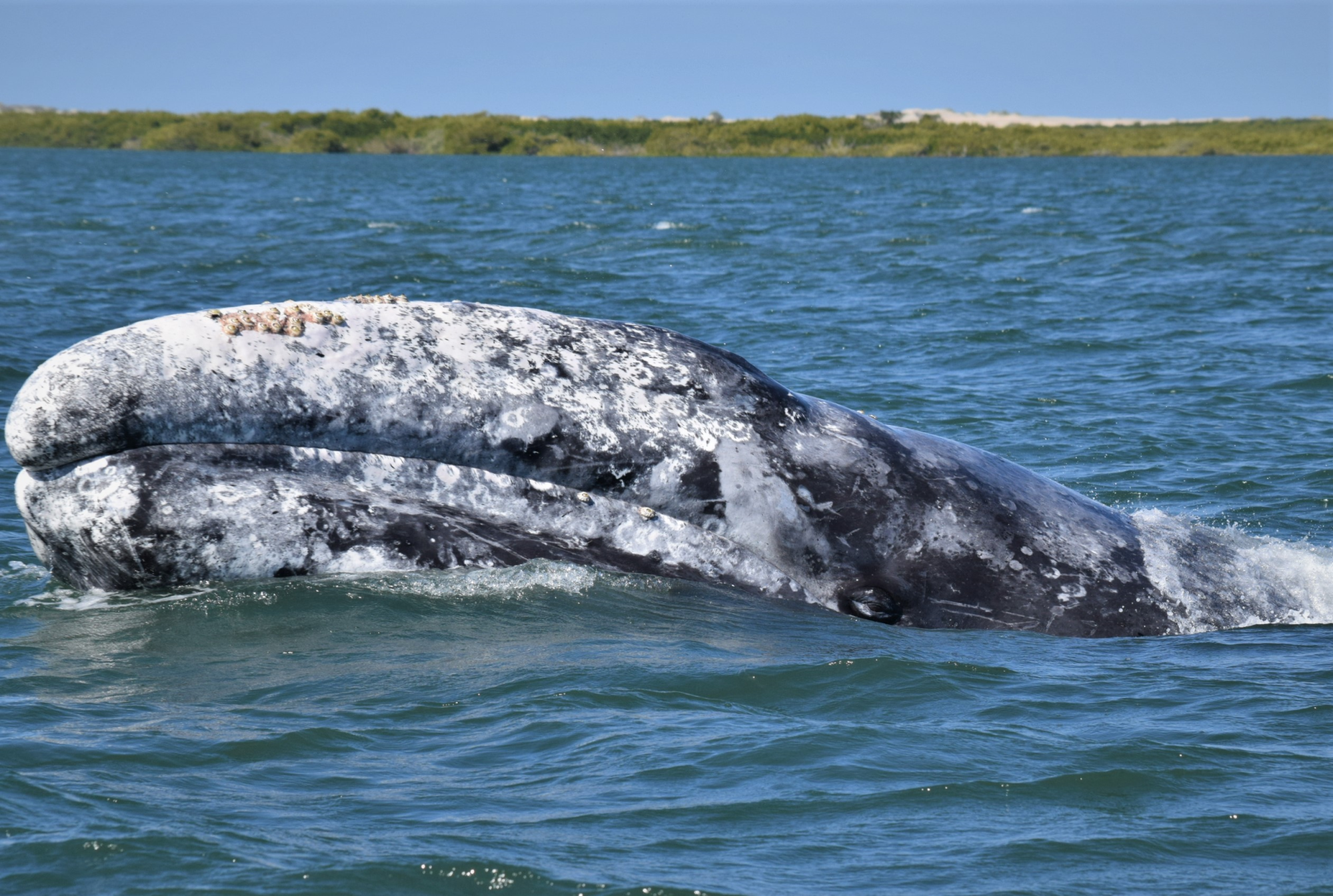
Gray Whale – Image: Whale Watch Cabo
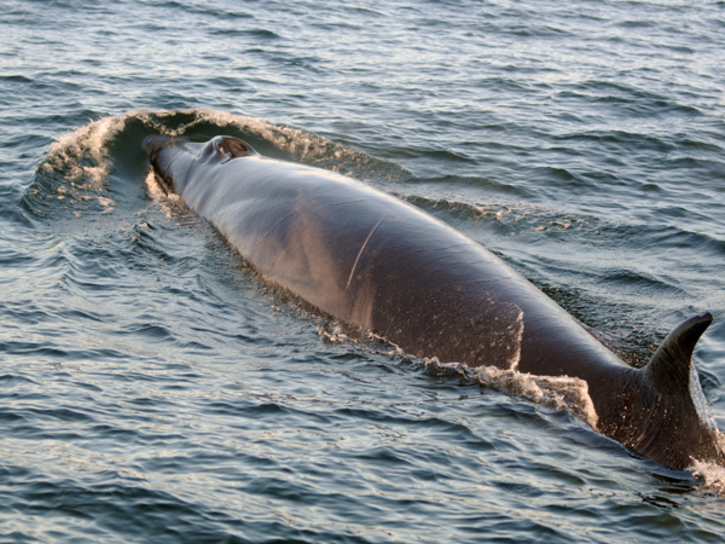
Sei whale – Image: IUCN Redlist
Sei whale
Scientific name: Balaenoptera borealis
Maximum size and weight: 20m (70ft) & 35 tons (77 000lbs)
Lifespan: 50-70 years (possibly exceeding 90)
Distribution: All major ocean basins but prefer temperate or sub-tropical waters
Diet: Copepods, krill, and other zooplankton
Conservation status: ‘Endangered’
Interesting fact: In June 2015, scientists flying over southern Chile counted 337 dead Sei whales, in what is regarded as the largest mass beaching ever documented.
Bryde’s whale
Scientific name: Balaenoptera brydei
Maximum size and weight: 16m (53ft) & 30 tons (66 000lbs)
Lifespan: 50-70 years (lack of data)
Distribution: Tropical, subtropical and warmer temperate waters
Diet: Variety of tiny crustaceans, cephalopods and small fish
Conservation status: ‘Data deficient’, however seemingly diminished in many regions
Interesting fact: Bryde’s whale is actually classified as two, potentially even three, distinct species. Also currently recognized is B. edeni, a smaller version of B.brydei that may be restricted to the Indo-Pacific.
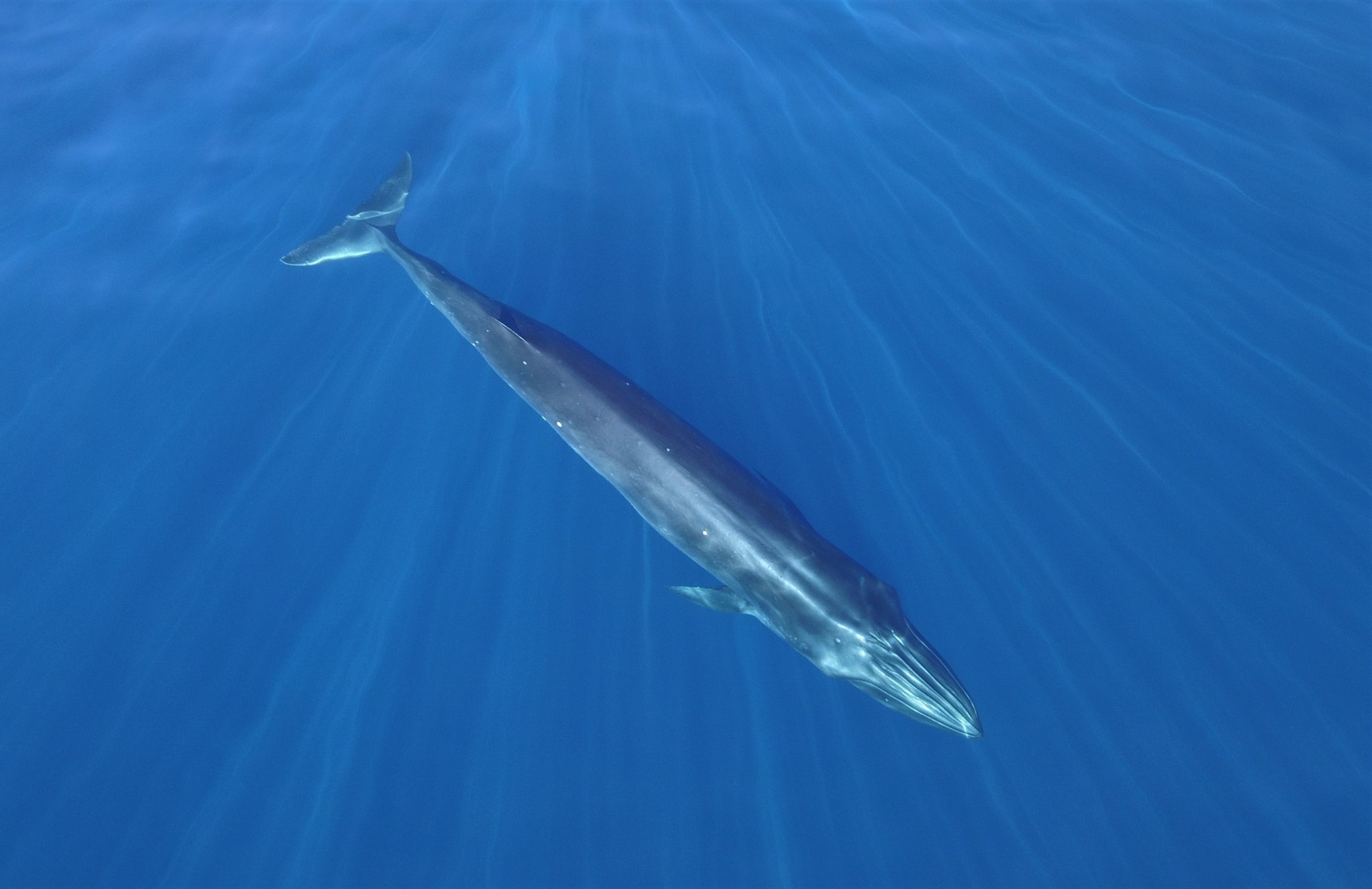
Bryde’s whale – Image: Whale Watch Cabo
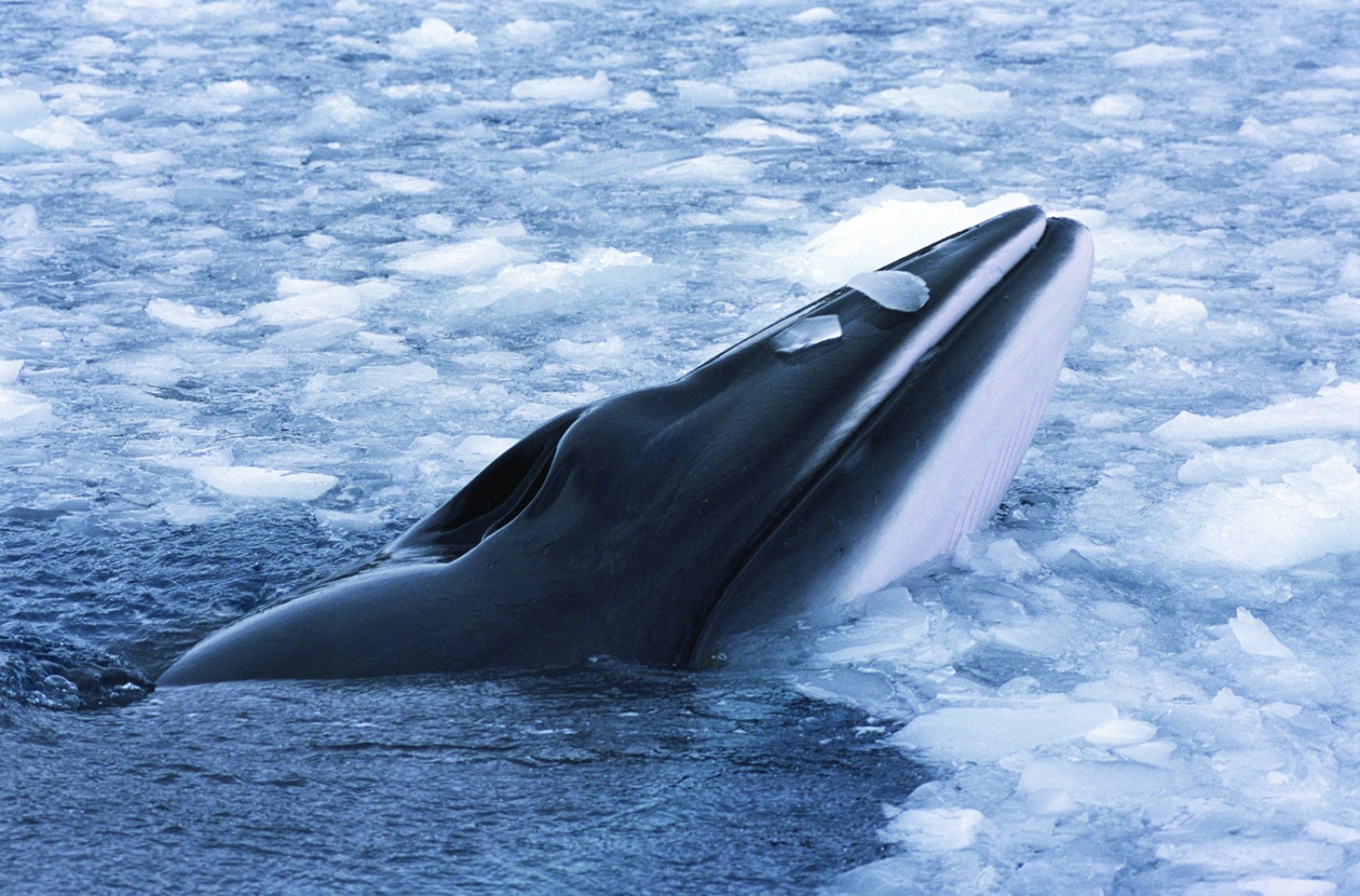
Antarctic Minke whale – Image: Oceanwide Expeditions
Antarctic Minke whale
Scientific name: Balaenoptera bonaerensis
Maximum size and weight: 10m (33ft) & 12 tons (27 000lbs)
Lifespan: 50 years (possibly exceeding 80)
Distribution: Most of the Southern hemisphere
Diet: Almost exclusively euphausiids
Conservation status: ‘Data deficient’ however population does not seem to be at risk
Interesting fact: Once largely ignored by commercial whalers because of their small size and low oil yield, Antarctic Minke whales have become a mainstay of the last remaining whalers since the protection of more depleted species.
Common Minke whale
Scientific name: Balaenoptera acutorostrata
Maximum size and weight: 10m (33ft) & 10 tons (22 000lbs)
Lifespan: 40-50 years (possibly exceeding 70)
Distribution: Disjointed, primarily in the Northern hemisphere. There are few population estimates for the Southern hemisphere as it can be difficult to distinguish from the more common Antarctic variety.
Diet: Primarily small schooling fish such as Cod, Herring or Pollock
Conservation status: ‘Least concern’
Interesting fact: Common Minke whales are the smallest of the Great whales and the second smallest Baleen whales, the smallest being the Pygmy Right whale.
Common Minke whale – Image: WWF